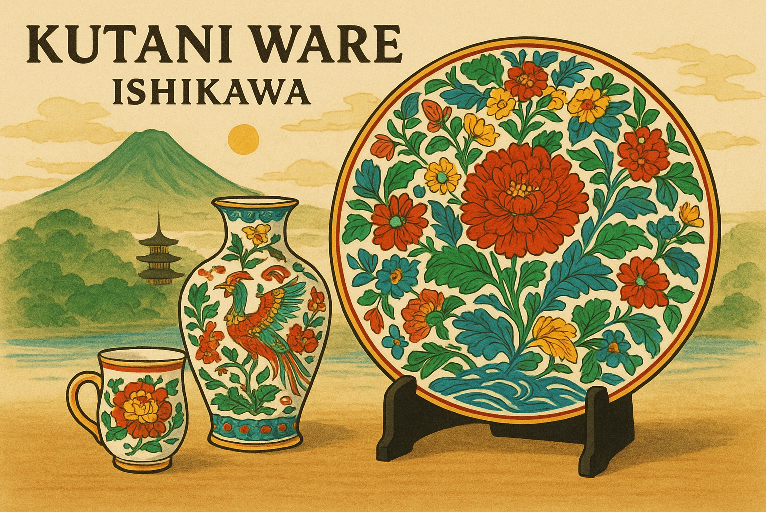
Nestled in the northern region of Ishikawa Prefecture, Kutani ware stands as one of Japan’s most celebrated ceramic traditions—instantly recognizable by its vivid colors, dynamic brushwork, and scenes that seem to leap from the porcelain surface. For centuries, Kutani pieces have captivated collectors and art lovers around the world, combining bold aesthetics with meticulous craftsmanship.
A History Shaped by Mystery and Revival
Kutani ware traces its origins back to the mid-17th century, when porcelain production began in the Kutani area under the patronage of the powerful Maeda clan. Early pieces, known as Ko-Kutani (“Old Kutani”), featured daring designs painted in deep greens, yellows, purples, and blues—colors rarely found in ceramics of the time. These early works were expressive, almost abstract, reflecting an artistic freedom ahead of their era.
Yet, this flourishing kiln abruptly ceased production after only several decades. The precise reason remains a historical mystery: theories range from resource shortages to political upheaval. For nearly a century, Kutani ware disappeared—only to be miraculously revived in the 19th century, leading to the diverse styles that exist today.
The Five Signature Colors of Kutani
Modern Kutani ware is famous for its “Gosai-de” palette—the five traditional Kutani colors:
green, yellow, red, purple, and navy blue.
These bold hues, layered over a milky white base, create a striking contrast unlike any other Japanese ceramic style. Many pieces depict nature, landscapes, and figures drawn from folklore or classical literature, expressed with energetic and luxurious brushwork.
A Fusion of Tradition and Modern Design
Today, Kutani artists continue to innovate while honoring centuries-old techniques. Contemporary creators produce everything from traditional folding screen motifs to minimalist, Scandinavian-friendly designs that appeal to younger generations. The region has also embraced collaborations with global brands, turning Kutani patterns into modern tableware, interior décor, and even fashion items.
Art festivals, workshops, and local museums in Ishikawa allow visitors to experience Kutani’s world firsthand—making it an attractive destination for travelers seeking authentic craftsmanship.
Why Kutani Ware Captures the World’s Imagination
For many admirers abroad, Kutani ware represents:
- A bold, expressive Japanese aesthetic different from the more restrained wabi-sabi styles
- A dramatic history marked by disappearance and revival
- High artistic value that blends fine-art painting with porcelain
- Versatile beauty—equally suited for traditional tea settings and modern homes
Its vibrant colors and storytelling nature make each piece feel like a small work of art, connecting people across cultures through visual emotion.
九谷焼 ― 石川県の伝説的な陶磁器が放つ鮮やかな芸術性
石川県北部に位置する九谷焼は、日本でも最も称賛される陶磁器の伝統の一つであり、その鮮やかな色彩、力強い筆致、そして磁器の表面から飛び出すように見える場面によって、ひと目でそれと分かります。何世紀にもわたり、九谷焼の作品は、集める人々や美術愛好家を世界中で魅了してきました。大胆な美学と綿密な職人技を組み合わせているからです。
謎と復興によって形づくられた歴史
九谷焼の起源は17世紀半ばにさかのぼります。この地域での磁器生産は、有力な前田家の後援のもと始まりました。初期の作品は 古九谷 として知られ、深い緑、黄色、紫、青といった、当時の陶磁器ではめったに見られなかった大胆な色彩を特徴としていました。これらの初期作品は、表現力に富み、ほとんど抽象的で、当時としては先進的な芸術的自由さを反映しています。
しかし、この繁栄していた窯は、わずか数十年で突然生産を停止しました。正確な理由は歴史上の謎のままです。資源不足から政治的混乱まで、さまざまな説があります。九谷焼はほぼ1世紀もの間姿を消し、しかし 19世紀に奇跡的に復興し、今日存在する多様な様式へとつながりました。
九谷焼を代表する五つの色
現代の九谷焼は、五彩と呼ばれる伝統的な五つの九谷の色、
緑・黄・赤・紫・紺青
で有名です。
これらの大胆な色は、乳白色の素地の上に重ねられ、他のどの日本の陶磁器にもないような際立った対比を生み出します。多くの作品には、自然、風景、民話や古典文学に由来する人物が描かれ、力強く豪華な筆致で表現されています。
伝統と現代デザインの融合
今日の九谷焼の作家たちは、何世紀にもわたる技法を尊重しながら革新を続けています。現代の作り手は、伝統的な屏風の図案から、若い世代に魅力的なミニマルで北欧風のデザインまで、あらゆるものを制作しています。この地域はまた、世界的ブランドとのコラボレーションも取り入れており、九谷の文様を現代の食器、インテリア装飾、さらにはファッションアイテムにまで展開しています。
石川県のアートフェスティバル、ワークショップ、地元の博物館では、訪れる人々が九谷の世界を直接体験することができ、真の職人技を求める旅行者にとっても魅力的な目的地となっています。
なぜ九谷焼は世界の想像力をつかむのか
多くの海外の愛好家にとって、九谷焼は次のようなものを意味します:
- より控えめで侘び寂び的なスタイルとは異なる、大胆で表現的な日本の美学
- 消滅と復興によって彩られた劇的な歴史
- 磁器に絵画芸術を融合させた高い芸術的価値
- 伝統的な茶の席にも現代の住まいにも似合う、万能の美しさ
その鮮やかな色彩と物語性のある表現は、どの作品も小さな芸術作品のように感じさせ、視覚的な感情を通して文化を超えて人々をつなぎます。