Among Japan’s many traditional crafts, Mino Washi from Gifu Prefecture stands out for its extraordinary lightness, strength, and natural elegance. With a history dating back over 1,300 years, this handmade paper has long been cherished for its durability and its soft, warm appearance—qualities that reflect the skill and sensitivity of its craftsmen.
Mino Washi originated during the Nara period, when artisans began producing high-quality paper using the fibers of kozo (paper mulberry), a plant known for its long, resilient fibers. Over centuries, the paper became highly valued by aristocrats, temples, and artists. In the Edo period, it was used for shoji screen doors, allowing sunlight to pass gently through homes and creating the iconic soft glow associated with Japanese interiors.
In recent years, traditional washi—especially Mino Washi—has seen a remarkable revival. As people around the world seek more sustainable materials, washi’s natural fibers and eco-friendly production methods have gained renewed attention. Designers now use Mino Washi in modern lighting, interior décor, packaging, stationery, and even fashion, demonstrating how this ancient craft can blend beautifully with contemporary aesthetics. The paper’s subtle textures and organic translucence have made it especially popular in minimalist and nature-inspired design.
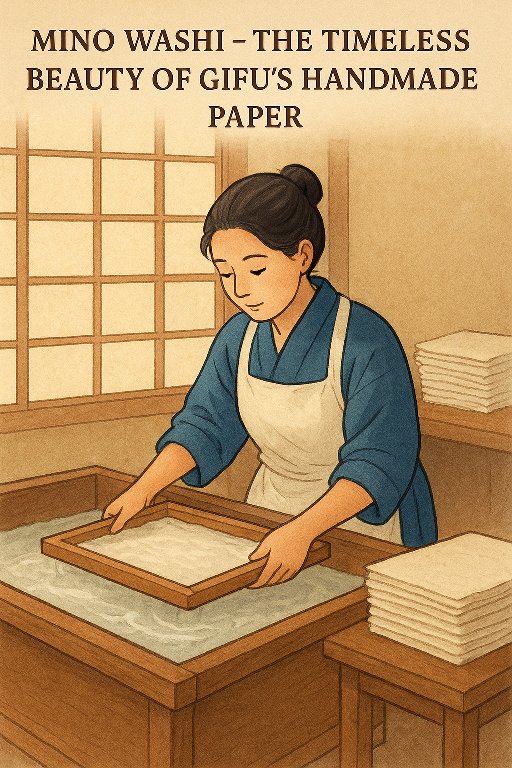
Today, visitors to Gifu can see artisans hand-crafting each sheet with time-honored techniques, skillfully scooping pulp with bamboo screens and shaping paper that is both incredibly delicate and surprisingly strong. Mino Washi is more than a material—it is a cultural legacy, connecting Japan’s past craftsmanship with its future creativity.
Whether displayed as artwork or incorporated into modern design, Mino Washi continues to inspire with its quiet beauty and enduring spirit.
美濃和紙 ― 岐阜の手すき紙が持つ時を超えた美しさ
日本の多くの伝統工芸の中で、岐阜県の 美濃和紙 は、その驚くべき軽さ、強さ、そして自然な優雅さによって際立っています。1300年以上にさかのぼる歴史を持つこの手すき紙は、その耐久性と柔らかく温かみのある外観によって長く大切にされてきました―それらの特質は、職人の技と感性を反映しています。
美濃和紙は奈良時代に起源を持ち、職人たちは繊維が長く丈夫な植物である 楮(こうぞ) を使って高品質の紙を作り始めました。何世紀にもわたり、この紙は貴族、寺院、そして芸術家たちに高く評価されました。江戸時代には、障子戸に使われ、日光が家の中に優しく差し込み、日本の伝統的な室内空間に見られる象徴的な柔らかな光を生み出しました。
近年では、伝統的な和紙―特に美濃和紙―が著しい復活を見せています。世界中の人々がよりサステナブルな素材を求める中で、和紙の自然素材と環境にやさしい製造方法が改めて注目を集めています。デザイナーたちは現在、美濃和紙を現代の照明、インテリア装飾、パッケージ、文具、さらにはファッションにも使用し、この古くからの工芸が現代の美学と美しく融合できることを示しています。特にその微妙な質感と有機的な透け感は、ミニマルデザインや自然を基調としたデザインにおいて人気を博しています。
今日では、岐阜を訪れる人々は、職人たちが伝統的な技法で一枚一枚を手作りする様子を見ることができます。竹の簀(す)でパルプをすくい上げ、非常に繊細でありながら驚くほど強い紙を形作るその技は、まさに熟練の技術です。美濃和紙は単なる素材以上の存在であり、日本の過去の職人技と未来の創造性をつなぐ文化的遺産なのです。
美術作品として展示されても、現代デザインに取り入れられても、美濃和紙はその静かな美しさと揺るぎない精神で人々を魅了し続けています。