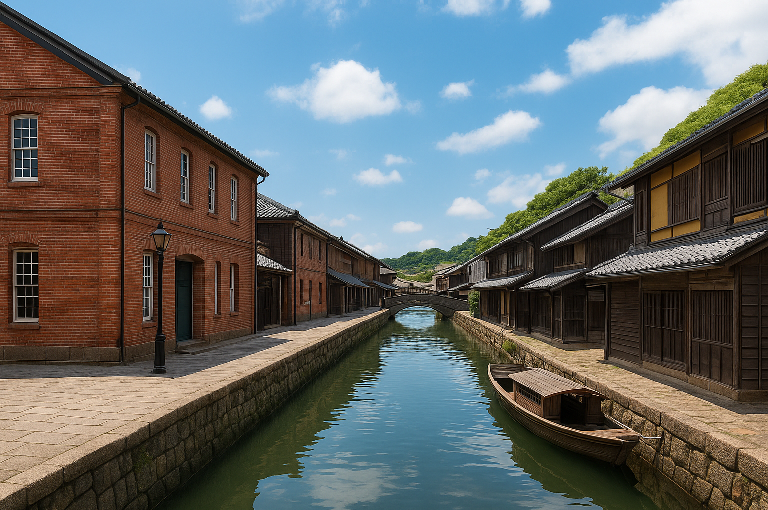
In the port city of Nagasaki lies Dejima, a small fan-shaped island that once served as Japan’s only gateway to the outside world during more than two centuries of isolation. From the 17th to the 19th century, when the Tokugawa shogunate enforced a strict policy of national seclusion, Dejima became the country’s sole point of contact with Europe—specifically the Dutch, who were allowed limited trade under careful supervision. Today, the restored buildings and streets of the island offer a fascinating look into one of the most unique chapters in Japanese history.
Walking through Dejima feels like stepping into a time capsule. The island’s Western-style residences, trade warehouses, and official offices have been faithfully reconstructed to show what life was like when merchants, interpreters, scholars, and officials all met at this tiny hub of cultural exchange. Here, new ideas, medicines, technologies, and scientific knowledge flowed into Japan, influencing fields such as astronomy, medicine, and cartography. It was on Dejima that “Dutch studies”—Japan’s early window into Western science—took root.
The surroundings of modern Dejima add an extra layer of charm. Nearby, Nagasaki’s historic neighborhoods blend Western and Japanese influences, reflecting centuries of international exchange. Strolling along the riverside or exploring local cafés and galleries, visitors can sense how the city’s open spirit has endured since the days when foreign ships sailed into its sheltered harbor.
For travelers looking to understand how Japan transformed from a closed nation into a modern, outward-looking country, Dejima is a must-see destination. It’s a place where history comes alive—not through grand monuments, but through the quiet stories of merchants, scholars, and sailors who once connected Japan to the world.
長崎・出島 ― 日本が初めて世界に窓を開いた場所
港町・長崎には出島があります。ここは、250年以上にわたる鎖国の時代、日本が外の世界へ通じる唯一の窓口として機能した、小さな扇形の島です。17世紀から19世紀にかけて、徳川幕府が厳しい鎖国政策を敷いていたとき、出島はヨーロッパ――特に、監視のもとで限定的な貿易を許されたオランダ――との唯一の接点となりました。今日では、この島の復元された建物や通りが、日本史のもっとも特異な一章をのぞき見る魅力的な機会を提供しています。
出島を歩くことは、まるでタイムカプセルの中に入るような感覚です。島の洋風住宅、貿易倉庫、役所などは、商人、通訳、学者、役人たちがこの小さな文化交流の拠点でどのように過ごしていたかを示すために忠実に復元されています。ここでは、新しい思想、薬、技術、科学知識が日本へ流れ込み、天文学、医学、地図製作などの分野に影響を与えました。「蘭学」――西洋科学への日本の初期の窓口――が根づいたのも、この出島でした。
現代の出島の周辺は、さらに魅力を加えています。近くの長崎の歴史的な地区には、西洋と日本の影響が混ざり合い、何世紀にもわたる国際交流を反映しています。川沿いを散策したり、地元のカフェやギャラリーを訪れたりすると、外国船がこの静かな湾に入ってきた当時から続く、長崎の「開かれた精神」を感じることができます。
日本が閉ざされた国から、現代的で外へ向けた国へとどのように変わっていったのかを理解したい旅行者にとって、出島は必見の場所です。ここは壮大な記念碑ではなく、かつて日本と世界をつないだ商人、学者、船乗りたちの静かな物語を通して歴史が生き生きと蘇る場所なのです。