In the vast northern island of Hokkaido, where icy winds sweep across the landscape in winter, there is a hot pot dish that perfectly embodies the region’s natural abundance and hearty food culture: Ishikari nabe. Named after the Ishikari River—one of Japan’s great salmon rivers—this traditional dish showcases the deep connection between Hokkaido’s people and the sea.
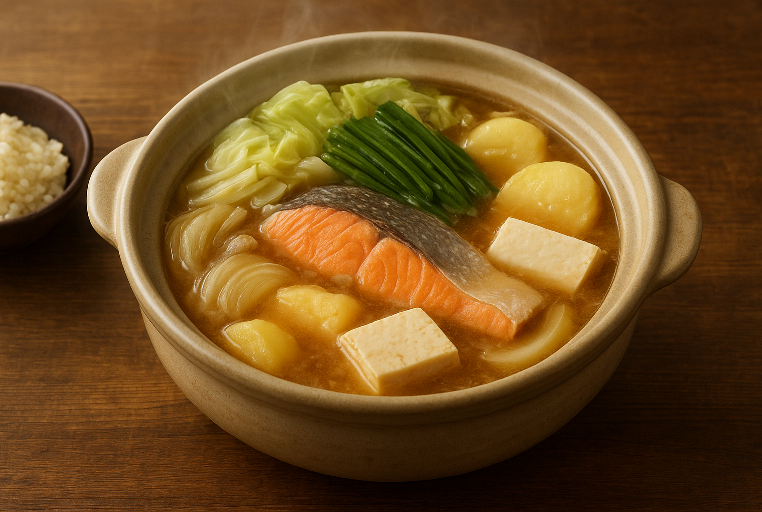
At the heart of Ishikari nabe is fresh salmon, cut into generous chunks and simmered in a miso-based broth. The broth is enriched with kelp from Hokkaido’s cold waters, giving it a savory depth. As the pot bubbles gently, salmon mingles with vegetables like cabbage, onions, potatoes, and tofu, all absorbing the rich, slightly sweet miso flavor. A final touch of butter or milk is sometimes added, creating a distinctive creaminess that warms the body from within.
Historically, Ishikari nabe began as a simple fisherman’s meal along the Ishikari River. It offered warmth, nutrition, and a way to enjoy the season’s catch. Today, it is a beloved local specialty served in homes and restaurants throughout Hokkaido, especially during the long winter months.
For travelers seeking a taste of Hokkaido’s wilderness and culinary heritage, Ishikari nabe is more than a dish—it is a comforting embrace from Japan’s northern frontier, rich with flavor, history, and the spirit of the land.
石狩鍋(北海道)
北海道という広大な北の島で、冬には冷たい風が大地を吹き抜ける場所に、その地域の自然の豊かさと力強い食文化を完璧に体現する鍋料理があります。それが「石狩鍋」です。この伝統的な料理は、日本を代表する鮭の川の一つである石狩川にちなんで名づけられ、北海道の人々と海との深い結びつきを示しています。
石狩鍋の中心にあるのは、たっぷりとした大きさに切られた新鮮な鮭で、味噌ベースの出汁で煮込まれます。この出汁は、北海道の冷たい海で採れる昆布で旨味が増され、風味に深みを与えています。鍋が静かに煮立つにつれ、鮭はキャベツ、タマネギ、ジャガイモ、豆腐といった野菜と混ざり合い、それぞれが濃厚でわずかに甘い味噌の味を吸い込みます。最後にバターやミルクが加えられることもあり、体の内側から温めてくれる独特のクリーミーさを生み出します。
歴史的に見ると、石狩鍋は石狩川沿いの漁師の素朴な食事として始まりました。それは暖かさと栄養、そして季節の獲れたての魚を味わう方法を提供していました。今日では、特に長い冬の間、北海道の家庭やレストランで広く親しまれる郷土料理となっています。
北海道の大自然と食の伝統を味わおうとする旅行者にとって、石狩鍋は単なる料理以上の存在です——それは日本の北の辺境からの心地よい抱擁であり、豊かな味わいと歴史、そして土地の精神に満ちています。