
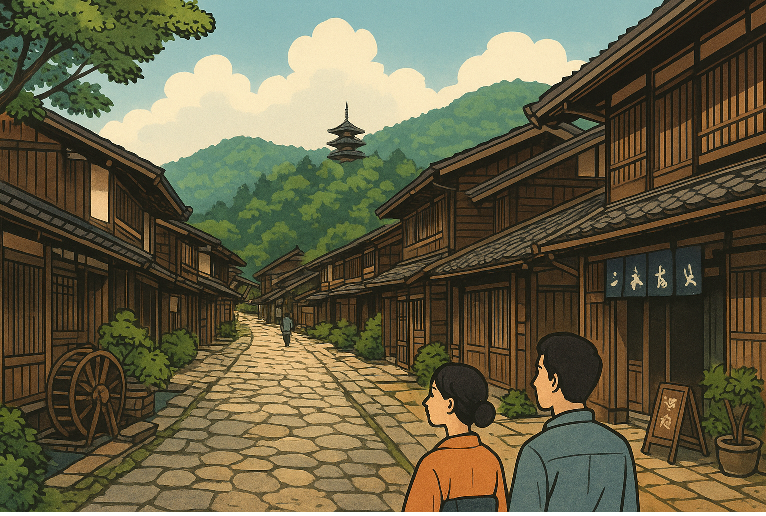
Nestled in the forested mountains between Nagano and Gifu Prefectures, Tsumago-juku and Magome-juku are two of the best-preserved post towns along the historic Nakasendo, the Edo-period highway that once connected Kyoto and Edo (Tokyo). These twin towns offer visitors a rare opportunity to step directly into the past—where wooden inns, stone-paved roads, and traditional shops still echo with the atmosphere of travelers from centuries ago.
Tsumago, known for its remarkable commitment to preservation, feels almost untouched by time. Power lines are hidden, cars are restricted, and wooden buildings stand just as they would have in the 1600s. As you stroll through the narrow streets, you can see old-fashioned inns (honjin and waki-honjin), small craft shops, and serene waterwheels. The gentle quiet of the town is part of its charm, making it easy to imagine weary Edo-period travelers stopping for rest.
Just a short hike away lays Magome, a beautifully restored hillside town with a dramatic sloping main street lined with traditional houses, cafés, and small eateries. The sound of water flowing through the roadside channels and the panoramic views of the Kiso Valley make Magome feel open, warm, and inviting. It’s an ideal place to sample local specialties such as gohei mochi, roasted rice cakes coated with miso or walnut sauce.
The scenic Tsumago–Magome trail, a popular 8 km hiking route through cedar forests, streams, and small rural hamlets, allows visitors to experience the Nakasendo as travelers once did—on foot. The path is well marked, peaceful, and rich with nature, offering a satisfying blend of history and outdoor adventure. Along the way, you might encounter small shrines, rustic tea houses, and even friendly locals who continue the tradition of welcoming passersby.
Whether you are drawn by history, photography, or the chance to enjoy a quiet walk through nature, Tsumago and Magome offer an unforgettable journey into Japan’s past. Here, the charm of the Edo period remains alive, inviting modern travelers to slow down, breathe deeply, and savor the timeless beauty of the Nakasendo.
妻籠宿と馬籠宿 ― 中山道を歩きながら時間をさかのぼる
長野県と岐阜県の間にある森に囲まれた山々に抱かれて、妻籠宿と馬籠宿は、歴史ある中山道沿いに残る最もよく保存された宿場町の二つです。江戸時代に京都と江戸(東京)を結んでいたこの街道で、これらの二つの町は、木造の宿屋、石畳の道、そして伝統的な店が、何世紀も前の旅人の雰囲気を今も響かせ続ける、過去へ直接足を踏み入れるまたとない機会を訪れる人に提供しています。
妻籠は、その驚くべき保存への取り組みで知られ、まるで時間に触れられていないかのように感じられます。電線は隠され、車の通行は制限され、木造建築物は1600年代当時のままに立ち並んでいます。細い通りを歩けば、本陣・脇本陣のような昔ながらの宿、小さな工芸品店、そして静かな水車を見ることができます。町に漂う穏やかな静けさは魅力の一部であり、江戸時代の疲れた旅人がここで休んだであろう情景を想像するのは難しくありません。
そこから少し歩いたところにあるのが馬籠で、美しく復元された坂道の町です。劇的な傾斜のあるメインストリートには、伝統的な家々、カフェ、小さな食事処が並んでいます。道端の水路を流れる水の音や、木曽谷のパノラマの景色によって、馬籠は開放的で温かく、迎え入れるような雰囲気を感じさせます。ここでは、味噌やくるみだれをつけて焼いた五平餅といった地元の名物を味わうのにも最適です。
景観の美しい妻籠〜馬籠間のトレイルは、杉林や小川、小さな農村集落を通る8kmの人気ハイキングルートで、訪れる人々にかつての旅人と同じように徒歩で中山道を体験する機会を与えてくれます。道は分かりやすく、静かで自然が豊かであり、歴史とアウトドアの冒険が心地よく融合しています。途中では小さな神社や素朴な茶屋、そして通りがかる旅人を迎える伝統を今も続ける親切な地元の人に出会うかもしれません。
歴史に惹かれる人も、写真を撮るのが好きな人も、自然の中で静かな散策を楽しみたい人も、妻籠と馬籠では日本の過去への忘れがたい旅を楽しむことができます。ここでは、江戸時代の魅力が今も生き続けており、現代の旅人を、ゆっくり歩き、深く息を吸い、そして中山道の変わらぬ美しさを味わう旅へと誘ってくれます。