
In the historic countryside of Tamba-Sasayama, surrounded by deep forests and crisp winter air, there is a traditional hot pot dish that captures both the richness of the land and the warmth of rural life: botan nabe, a wild boar hot pot enjoyed during the coldest months of the year. While wild boar is eaten in various parts of the world, Tamba-Sasayama has elevated it into a beloved local specialty with deep cultural roots.
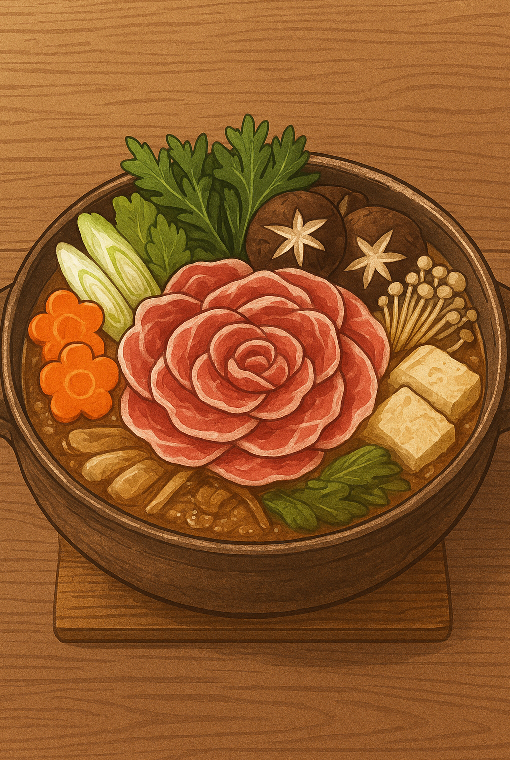
The dish is known locally as botan nabe, meaning “peony hot pot.” This poetic name comes from the way raw slices of wild boar meat are artfully arranged on a plate before cooking. The meat—varying in shades from pale pink to deep red—is placed in a circular pattern resembling the petals of a blooming peony flower. This elegant presentation, combined with the region’s pride in its high-quality wild boar, has made the name botan nabe widely embraced in Tamba-Sasayama, even though some regions simply call it shishi nabe (“boar hot pot”).
Once the beautifully arranged meat is added to the pot, it is simmered with an assortment of hearty local vegetables such as daikon radish, burdock root, carrots, spring onions, and sansai (mountain greens). The broth is typically seasoned with miso, which blends with the natural richness of the boar meat to create a deep, warming flavor—perfect for cold winter nights.
For many locals, botan nabe is more than just a dish; it is a seasonal tradition that evokes memories of family gatherings, snowy landscapes, and the comforting aromas of simmering miso. Travelers visiting Tamba-Sasayama during winter often find that tasting botan nabe offers an intimate glimpse into the region’s culinary heritage and its connection to the surrounding nature.
With its elegant presentation, rustic ingredients, and heartwarming flavor, botan nabe stands as one of Japan’s most distinctive winter hot pots—a dish that brings people together, just as it has for generations in Tamba-Sasayama.
ぼたん鍋(兵庫・丹波篠山)
深い森と澄んだ冬の空気に囲まれた、歴史ある田園地域の丹波篠山には、その土地の豊かさと農村の暮らしの温かさの両方を捉える、伝統的な鍋料理があります。それが、もっとも寒い時期に楽しまれる猪肉の鍋料理、ぼたん鍋です。世界のさまざまな地域でも猪肉を食べる習慣はありますが、丹波篠山では、それを深い文化的な根を持つ愛される郷土料理へと昇華させています。
この料理は、地元では「ぼたん鍋」として知られており、その意味は「牡丹の鍋」です。この詩的な名前は、調理する前に、猪肉の生の薄切りを皿の上に芸術的に並べる方法から来ています。肉は淡いピンクから深い赤まで色合いが異なり、咲きほこる牡丹の花びらを思わせる円形の模様に配置されます。この優雅な盛り付けと、この地域が誇る上質な猪肉が組み合わさったことで、一部の地域では「しし鍋(猪鍋)」と呼ばれているにもかかわらず、丹波篠山では「ぼたん鍋」という名前が広く受け入れられています。
美しく並べられた肉を鍋に加えると、大根、ごぼう、にんじん、ねぎ、山菜など、滋味深い地元の野菜とともに煮込まれます。出汁は通常みそで調味され、猪肉が持つ自然な濃厚さと混ざり合って、寒い冬の夜にぴったりの、深く温まる風味を生み出します。
多くの地元の人々にとって、ぼたん鍋は単なる料理ではありません。それは家族の集まり、雪景色、そして煮込まれるみその心地よい香りを思い起こさせる、季節の伝統なのです。冬に丹波篠山を訪れる旅行者は、ぼたん鍋を味わうことで、この地域の食文化と自然とのつながりを親密に感じることができます。
その優雅な盛り付け、素朴な食材、そして心温まる味わいによって、ぼたん鍋は日本でもっとも特徴的な冬の鍋料理の一つとして立ち、丹波篠山で何世代にもわたって人々を結びつけてきたのです。