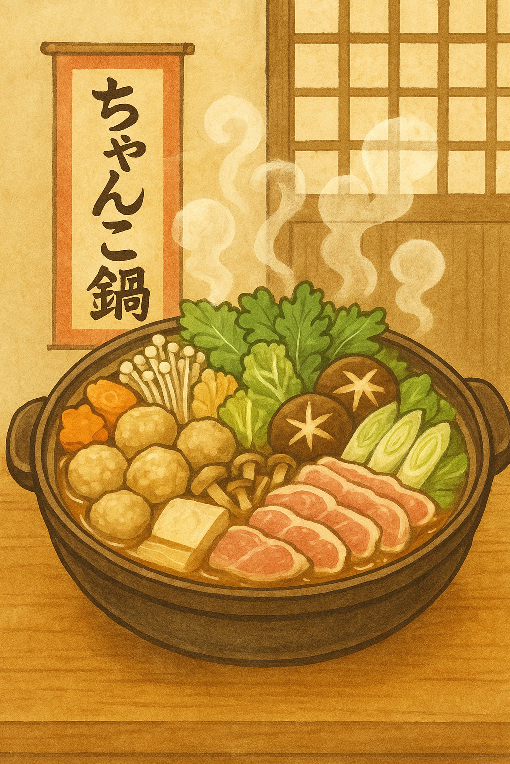
In the heart of Tokyo’s sumo district, Ryogoku, there is a hot pot dish that embodies both the strength and camaraderie of Japan’s national sport: chanko nabe. Traditionally eaten by sumo wrestlers as part of their daily training diet, this hearty and nutritious hot pot has become a beloved winter comfort food for locals and visitors alike.
Chanko nabe is less a single recipe and more a flexible style of cooking. Each stable (heya) prepares its own version, often passed down from senior wrestlers. While the base broth may vary—chicken, soy sauce, miso, or salt—the essence of the dish remains the same: an abundance of ingredients simmered together to create a meal that is both nourishing and communal.
A typical pot includes chicken, the most symbolic protein for sumo wrestlers, as they believe eating chicken—an animal that stands on two legs—brings good luck in competition. Along with the meat, the pot overflows with tofu, napa cabbage, mushrooms, leeks, carrots, and seasonal vegetables. Fish, seafood, meatballs, or pork may also be added, depending on the preferences of the stable. The variety ensures a well-balanced, protein-rich meal designed to build stamina and strength.
Eating chanko nabe is inherently a shared experience. Wrestlers gather around a steaming pot after rigorous training sessions, reinforcing the bonds between teammates. Today, many former wrestlers run chanko restaurants in Ryogoku, allowing visitors to taste the flavors of sumo culture firsthand.
For travelers exploring the area, enjoying a bowl of chanko nabe is more than just a culinary experience—it offers a glimpse into the daily life, traditions, and discipline of sumo wrestling. The warmth of the broth, the richness of the ingredients, and the spirit of togetherness all capture the essence of Ryogoku’s unique cultural landscape.
Hearty, wholesome, and deeply rooted in tradition, chanko nabe remains one of Tokyo’s most iconic winter dishes—a symbol of both physical nourishment and the communal spirit that defines sumo.
ちゃんこ鍋 (両国,東京)
東京の両国で、相撲文化が街の景色と日常に深く根付いている場所には、力士たちの食生活を支えてきた伝統的な鍋料理があります。それが、ちゃんこ鍋です。長い歴史の中で、ちゃんこ鍋は単なる栄養食以上の存在となり、両国という地域の象徴的な味として広く親しまれています。
ちゃんこ鍋は、肉、魚、そしてたっぷりの野菜を組み合わせた、バランスの良い一鍋料理です。相撲部屋ごとにさまざまなスタイルがありますが、多くの場合、鶏肉が中心的な具材として使われます。これは、「二本足で立つ鳥」が、「四つん這いにならない」縁起の良さを象徴しているためです。とはいえ、豚肉、牛肉、海鮮が入ったバリエーションもよく見られ、どれも稽古で消費した膨大なエネルギーを補うのに十分な量と栄養を備えています。
ちゃんこ鍋の魅力のひとつは、その豊富な具材がすべて同じ鍋で煮込まれ、うま味が重なり合うことにあります。だしやしょうゆ、味噌などで味付けされたスープは、具材が煮込まれるにつれて深みを増し、寒い季節には特に身体を温める満足感のある味わいを生み出します。最後にうどんやごはんを入れて仕上げるのも一般的で、鍋のうま味を余すことなく楽しむことができます。
今日では、ちゃんこ鍋は力士だけのものではありません。両国では、多くのちゃんこ鍋専門店が訪れる人々を迎え、誰でも相撲の文化を「食べる」形で体験できるようになっています。店内の力士ゆかりの写真やまわしの展示、そして豪快な鍋料理の提供は、街全体に相撲文化が生き続けていることを感じさせます。
ただの栄養源として始まったちゃんこ鍋は、いまでは両国の歴史と精神を象徴する一皿となりました。温かく、力強く、そしてどこか親しみ深い味わいのこの鍋は、東京の冬の食文化の中でも特に記憶に残る存在です。