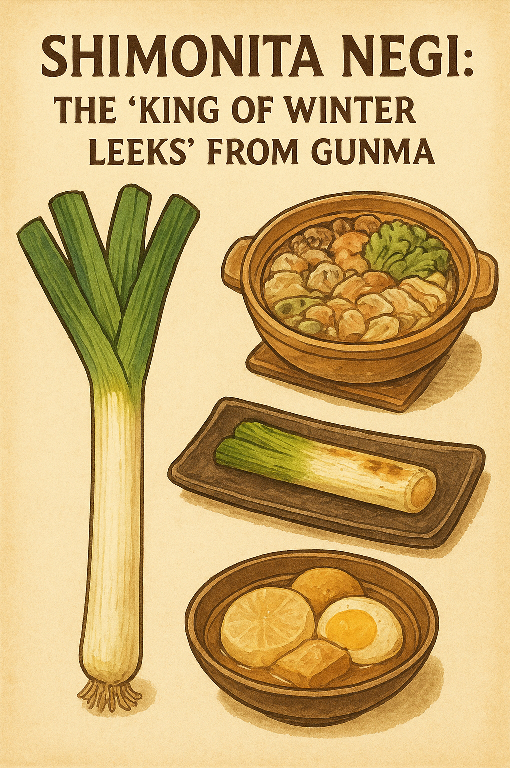
If you travel through Japan during the winter months, you may come across a remarkable vegetable piled high in local markets: Shimonita Negi, a regional leek from Gunma Prefecture that has earned the nickname “the king of sweet winter leeks.” At first glance, it looks more like a giant white baton than a typical leek — and that is precisely what sets it apart.
How Shimonita Negi Differs from Other Leeks
Unlike ordinary Japanese long onions (negi), which are slender and sharply flavored, Shimonita Negi is thick, soft, and exceptionally sweet. Its lower white portion can grow astonishingly large, sometimes as wide as a wrist. When cooked, it becomes creamy and almost melt-in-your-mouth, making it a prized ingredient for winter dishes. The unique texture comes from the region’s cold climate and mineral-rich soil, which encourage the plant to store extra sugars as natural antifreeze.
A Brief Historical Background
Shimonita Negi has been grown in the area for centuries. Edo-period records mention that daimyō and feudal lords prized it as a luxury winter vegetable. Local farmers preserved its lineage through careful seed selection, and it eventually became one of Gunma’s most iconic regional brands. Even today, production remains limited because the leek requires labor-intensive cultivation and grows only during the coldest months of the year.
How It Is Enjoyed
In Japanese cuisine, Shimonita Negi plays a starring role in seasonal cooking.
- Nabe (hot pot): Its sweetness deepens the broth and pairs beautifully with pork, chicken, and tofu.
- Yaki-negi (grilled leek): When roasted slowly over charcoal, the outer skin burns away to reveal a soft, custard-like interior.
- Oden: Thick slices absorb the broth and deliver a warm burst of flavor with each bite.
Some restaurants serve it simply with miso — a combination beloved in Gunma for generations.
A Cultural Symbol of Winter
More than just a vegetable, Shimonita Negi represents the comfort and warmth of Japanese winter. As temperatures drop, families look forward to hearty hot-pot meals, and this leek signals the arrival of the season’s most comforting flavors. For travelers seeking to understand Japan through its regional foods, tasting Shimonita Negi is like discovering a piece of local heritage preserved in every bite.
If you visit Gunma in winter, be sure to try it at a traditional inn or a countryside market. One taste may convince you why this humble leek has become a wintertime treasure celebrated across Japan.
下仁田ねぎ:群馬が誇る“冬のねぎの王様”
冬の数か月のあいだに日本を旅すると、地元の市場に高く積まれている驚くべき野菜に出会うかもしれません。それが、下仁田ねぎ――群馬県の地域ねぎで、「甘い冬ねぎの王様」という愛称を得ているねぎです。最初に見ると、典型的なねぎというより巨大な白い棒のように見えます――そして、まさにそれこそがこのねぎを他と区別する点です。
下仁田ねぎが他のねぎと違う点
ほっそりとして風味が鋭い普通の日本の長ねぎとは違い、下仁田ねぎは太く、やわらかく、非常に甘いのが特徴です。白い下部は驚くほど大きく育ち、ときには手首ほどの太さになることもあります。調理すると、クリーミーでほとんど口の中でとろけるようになり、冬の料理で高く評価される食材です。この独自の食感は、地域の寒冷な気候とミネラル豊富な土壌によるもので、植物が天然の不凍液として余分な糖分を蓄えるよう促すのです。
簡単な歴史的背景
下仁田ねぎは、この地域で何世紀にもわたり栽培されてきました。江戸時代の記録には、大名や藩主たちが冬の高級野菜としてこれを珍重したと記されています。地元の農家は慎重な種の選抜を通してその系統を守り続け、それはやがて群馬のもっとも象徴的な地域ブランドのひとつになりました。今日でも、栽培には手間のかかる管理が必要で、最も寒い時期にしか育たないため、生産量は限られています。
どのように楽しまれているか
日本料理では、下仁田ねぎは季節料理で主役級の存在です。
- 鍋料理:その甘さがだしを深くし、豚肉、鶏肉、豆腐とよく合います。
- 焼きねぎ:炭火でゆっくり焼くと外皮が焦げ、中からカスタードのように柔らかな身が現れます。
- おでん:太い輪切りがだしを吸い込み、一口ごとに温かい旨みが広がります。
群馬では、シンプルに味噌を添えて提供する店もあり、代々愛されてきた組み合わせです。
冬の文化的象徴
下仁田ねぎは単なる野菜以上の存在で、日本の冬の安らぎと温かさを象徴しています。気温が下がると、家庭では心あたたまる鍋料理が待ち望まれ、このねぎはその季節もっとも心地よい風味の到来を告げます。地域の食を通じて日本を理解したい旅行者にとって、下仁田ねぎを味わうことは、一口ごとに守り継がれてきた地域の遺産を発見するようなものです。
冬に群馬を訪れるなら、ぜひ伝統的な旅館や田舎の市場で試してみてください。ひと口で、この素朴なねぎが日本中で祝われる冬の宝物になった理由がわかるかもしれません。