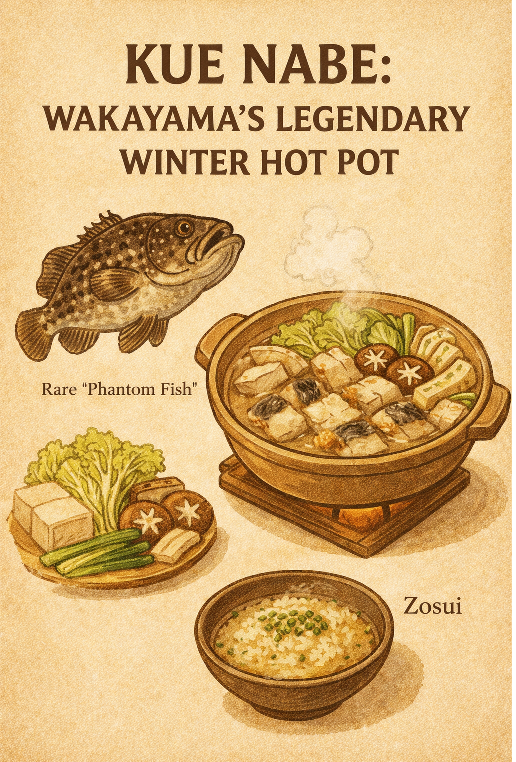
Along the rugged coastline of Wakayama Prefecture, winter brings with it one of Japan’s most luxurious seasonal dishes: kue nabe, a hot pot made with kue, a large deep-sea grouper often called “the phantom fish.” Rare, rich, and deeply tied to local fishing culture, kue nabe is considered a true reward for enduring the cold months.
What Makes Kue Different from Other Fish
Kue stands apart from ordinary fish used in hot pots. Its flesh is firm yet delicate, with a high natural fat content that melts gently when heated. Unlike lighter white fish, kue offers a deep, savory richness similar to premium meats, while still retaining the clean elegance of seafood. Even the skin and bones contribute remarkable flavor, producing a broth that becomes thicker and more umami-rich as the pot simmers.
Historical Background and Rarity
For centuries, kue was known only to local fishermen along the Kii Peninsula. Because it lives in deep waters and is difficult to catch, it was once considered too precious — or too risky — to ship beyond the region. In coastal villages of Wakayama, kue was traditionally eaten only in winter, when the fish carries maximum fat and flavor. Over time, its reputation spread, and today it is celebrated as one of Japan’s most prestigious winter seafoods.
How Kue Nabe Is Prepared
Kue nabe is a study in simplicity. Thick cuts of fish are added to a kombu-based broth along with vegetables such as napa cabbage, tofu, mushrooms, and green onions. As the pot gently boils, the fish releases its oils, transforming the broth into a golden, fragrant soup. The dish is often finished with zosui — rice cooked in the remaining broth — ensuring that none of the flavor is wasted. This final bowl is often considered the highlight of the meal.
A Winter Delicacy with Cultural Meaning
More than a luxury, kue nabe represents the spirit of sharing warmth during Japan’s winter. Traditionally enjoyed with family or close companions, the dish reflects coastal life, seasonal patience, and respect for nature’s timing. In Wakayama, serving kue nabe is a sign of hospitality and celebration, reserved for special gatherings and meaningful occasions.
For travelers visiting Wakayama in winter, tasting kue nabe offers more than exceptional flavor — it provides a rare connection to the sea, local tradition, and the quiet elegance of Japan’s seasonal food culture.
クエ鍋:和歌山が誇る伝説的な冬の鍋料理
和歌山県の険しい海岸線に沿って、冬は日本でもっともぜいたくな季節料理のひとつをもたらします。それが、クエ鍋――「幻の魚」とも呼ばれる大型の深海性ハタ、クエを使った鍋料理です。希少で、味わいが豊かで、地域の漁業文化と深く結びついたクエ鍋は、寒い季節を耐え抜いたご褒美のような存在とされています。
クエが他の魚と違う点
クエは、鍋に使われる一般的な魚とは一線を画します。その身はしっかりしていながらも繊細で、天然の脂肪分を多く含み、加熱するとそれがやさしく溶け出します。淡白な白身魚とは異なり、クエは高級な肉に似た深くコクのある旨みを持ちながら、魚介ならではの澄んだ上品さも保っています。皮や骨でさえも驚くほどの風味を加え、鍋が煮えるにつれて、だしはより濃く、旨み豊かなものへと変わっていきます。
歴史的背景と希少性
何世紀にもわたり、クエは紀伊半島沿岸の漁師たちだけに知られてきました。深い海に生息し、捕るのが難しいため、かつては地域の外へ出荷するにはあまりにも貴重、あるいは危険な魚だと考えられていました。和歌山の沿岸集落では、クエは伝統的に脂と旨みが最高潮に達する冬にだけ食べられてきました。時が経つにつれてその評判は広まり、今日では日本を代表する高級な冬の海の幸のひとつとして称えられています。
クエ鍋の調理法
クエ鍋は、シンプルさを極めた料理です。厚切りのクエを、昆布だしに白菜、豆腐、きのこ、青ねぎなどの野菜とともに加えます。鍋が静かに沸くにつれて、魚の脂が溶け出し、だしは黄金色で香り高いスープへと変わります。食事の締めには、残っただしでご飯を煮る雑炊が作られることが多く、旨みを一滴も無駄にしません。この最後の一杯こそが、食事のクライマックスだと考える人も少なくありません。
文化的意味を持つ冬の珍味
ぜいたく品である以上に、クエ鍋は日本の冬における**「温かさを分かち合う心」**を象徴しています。伝統的に、家族や親しい仲間とともに囲まれ、海辺の暮らし、季節を待つ忍耐、そして自然の巡りへの敬意を映し出す料理です。和歌山では、クエ鍋を振る舞うことはもてなしと祝福のしるしであり、特別な集まりや大切な機会のために用意されます。
冬に和歌山を訪れる旅行者にとって、クエ鍋を味わうことは、卓越した味覚体験以上のものです。それは、海、地域の伝統、そして日本の季節の食文化が持つ静かな優雅さとつながる、貴重な体験となるでしょう。