When winter arrives along the Sea of Japan, anticipation builds in Fukui Prefecture for the start of the Echizen crab season. Known locally as Echizen-gani, this prized snow crab is regarded as one of Japan’s finest winter delicacies. Its rich flavor, strict quality control, and deep ties to coastal life have made it a symbol of winter luxury and regional pride.
What Makes Echizen Crab Different
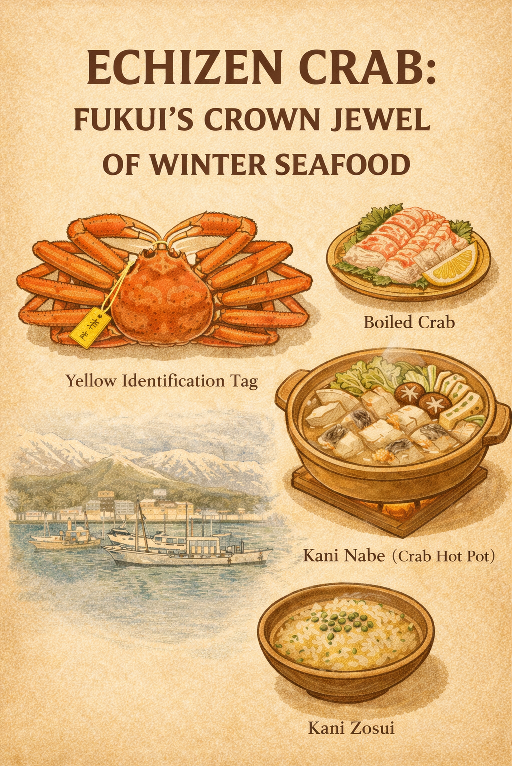
Echizen crab is a type of snow crab (zuwaigani), but not all snow crabs are Echizen crab. Only male crabs landed at ports in Fukui Prefecture during the official fishing season earn this name. Each crab is tagged with a yellow identification tag, guaranteeing its origin and quality. Compared with other crabs, Echizen crab is celebrated for its sweet, firm meat and its exceptionally flavorful crab miso (tomalley), which has a deep, oceanic richness.
Historical Background
Crab fishing has supported Fukui’s coastal communities for centuries. Records from the Edo period describe snow crab as a valuable winter catch, enjoyed by feudal lords and offered as tribute. Over time, Echizen crab became closely associated with the region’s identity, and modern branding efforts have preserved its reputation by enforcing strict rules on fishing seasons, size limits, and handling methods. This careful stewardship reflects Japan’s long tradition of respecting seasonal abundance.
How Echizen Crab Is Enjoyed
Echizen crab is often prepared in ways that highlight its natural flavor.
- Boiled crab is the most classic preparation, allowing the sweetness of the meat to shine.
- Crab sashimi, possible only with extremely fresh crab, offers a delicate, almost translucent texture.
- Grilled crab adds a subtle smokiness, while crab hot pot (kani nabe) creates a deeply satisfying winter meal.
The meal often ends with kani zosui, rice cooked in the remaining crab broth, capturing the essence of the sea in a final bowl.
A Cultural Symbol of Winter
More than a luxury ingredient, Echizen crab represents the rhythm of winter life along the Sea of Japan. Families, friends, and travelers gather around steaming pots to celebrate the short crab season, which lasts only a few months each year. The anticipation, scarcity, and shared enjoyment all contribute to its cultural value.
For visitors to Fukui in winter, tasting Echizen crab is not simply about indulgence — it is an invitation to experience Japan’s deep respect for seasonality, craftsmanship, and the fleeting beauty of winter’s finest flavors.
越前ガニ:福井が誇る冬の海の至宝
日本海沿岸に冬が訪れると、福井県では越前ガニ漁の解禁を心待ちにする空気が高まります。地元では「越前がに」と呼ばれるこの高級ズワイガニは、日本を代表する冬の味覚のひとつとして知られています。その豊かな味わい、厳格な品質管理、そして沿岸の暮らしと深く結びついた背景により、越前ガニは冬のぜいたくと地域の誇りの象徴となっています。
越前ガニが特別である理由
越前ガニはズワイガニの一種ですが、すべてのズワイガニが越前ガニと呼ばれるわけではありません。公式の漁期中に福井県の港で水揚げされたオスのカニだけが、この名前を名乗ることを許されています。ひとつひとつのカニには黄色の識別タグが付けられ、産地と品質が保証されています。他のカニと比べて、越前ガニは甘く締まった身と、海の旨みが凝縮された非常に風味豊かなカニ味噌で高く評価されています。
歴史的背景
カニ漁は、何世紀にもわたって福井の沿岸地域を支えてきました。江戸時代の記録には、ズワイガニが冬の貴重な水揚げとして、大名に食されたり、献上品として用いられたりしたことが記されています。やがて越前ガニは地域のアイデンティティと強く結びつくようになり、現代のブランド化の取り組みによって、漁期、サイズ制限、取り扱い方法などに厳しい規則が設けられ、その評価が守られてきました。こうした慎重な管理は、旬の恵みを尊ぶ日本の長い伝統を反映しています。
越前ガニの味わい方
越前ガニは、その自然な味わいを引き立てる調理法で楽しまれることが多いです。
- 茹でガニは最も定番の調理法で、身の甘さを存分に味わえます。
- カニ刺しは、極めて新鮮なカニでしか味わえない料理で、透き通るように繊細な食感が特徴です。
- 焼きガニはほのかな香ばしさを加え、カニ鍋は冬ならではの満足感を与えてくれます。
食事の締めには、残ったカニのだしでご飯を炊くカニ雑炊が供されることが多く、最後の一杯に海の旨みが凝縮されます。
冬を象徴する文化的存在
越前ガニは、単なる高級食材にとどまらず、日本海沿岸の冬の暮らしのリズムを象徴する存在です。家族や友人、そして旅人たちが、数か月しか続かない短いカニの季節を祝うため、湯気の立つ鍋を囲みます。期待感、希少性、そして分かち合う楽しさ――それらすべてが、越前ガニの文化的価値を形作っています。
冬に福井を訪れる人にとって、越前ガニを味わうことは、単なるぜいたくではありません。それは、日本が大切にしてきた季節感、職人技、そして冬の最上の味覚が持つはかなさを体験する招待なのです。