
2026.01.11
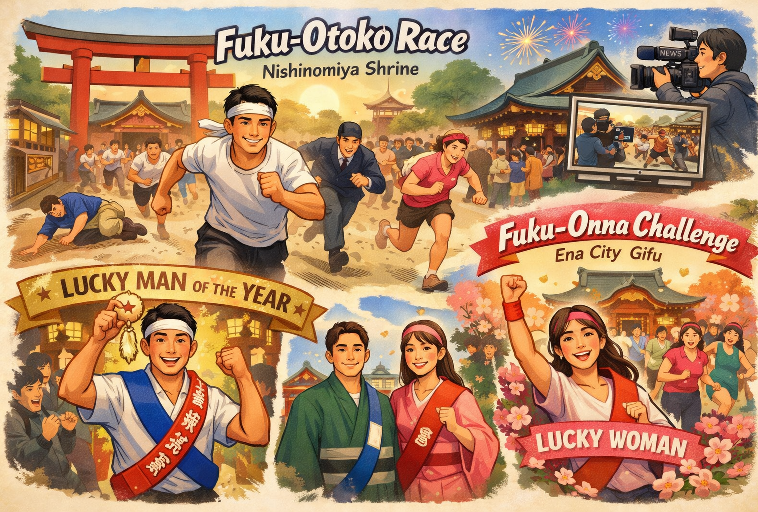
Every January, one of Japan’s most energetic and symbolic New Year events takes place at Nishinomiya Shrine in Hyogo Prefecture. It is called Fuku-Otoko Erabi, or the “Selection of the Lucky Man.”
The event is held early in the morning as part of the shrine’s New Year celebrations. When the shrine gates open, hundreds of male participants dash toward the main hall along a fixed course. The rules are simple: run as fast as you can, and be among the first to reach the destination. The top finishers earn the title of Fuku-Otoko, which literally means “Lucky Man of the Year.”
Becoming the number one Fuku-Otoko is considered a great honor. It symbolizes good fortune, vitality, and success for the year ahead—not only for the winner, but also as a positive omen for the wider community. Although the title does not come with wealth or power, it carries strong cultural meaning and pride.
Each year, images of the race are widely shown on national television news. Participants sprint at full speed, sometimes colliding or even falling along the way, yet continuing with determination. These dramatic scenes have become a familiar New Year’s sight across Japan, marking the start of the year with excitement and hope. In 2026, the race was held on January 10, continuing this long-standing tradition.
Additional Note: A New Step Toward the Future
In today’s gender-conscious era, some people have begun to ask: if there is a Fuku-Otoko, why not a Fuku-Onna—a Lucky Woman? Reflecting this idea, a new event called the Fuku-Onna Challenge was held for the first time in Ena City, Gifu Prefecture. In this event, women competed in a similar spirit, and the very first “number one lucky woman” was selected.
Together, these events show how traditional Japanese customs can evolve while still preserving their joyful spirit—welcoming a new year with energy, inclusiveness, and a wish for good fortune for all.
福男レース:西宮神社の新年の伝統行事
毎年1月、兵庫県の西宮神社では、日本で最も活気があり象徴的な新年行事の一つが行われます。それは「福男選び」と呼ばれています。
この行事は、神社の新年の祭りの一環として早朝に開催されます。神社の門が開くと、何百人もの男性参加者が、決められたコースに沿って本殿を目指して走ります。ルールはとてもシンプルで、できるだけ速く走り、最初に目的地に到着することです。上位でゴールした人たちは、「福男」という称号を得ます。この言葉は文字通り「その年の幸運な男」を意味します。
一位の福男になることは、大きな名誉とされています。それは、その年の幸運、活力、成功を象徴するものであり、勝者本人だけでなく、より広い地域社会にとっても良い前兆と考えられています。この称号には富や権力が伴うわけではありませんが、強い文化的意味と誇りがあります。
毎年、このレースの様子は全国ニュースで広く紹介されます。参加者たちは全力で走り、途中でぶつかったり、転んだりすることもありますが、それでも懸命に走り続けます。こうした迫力ある光景は、日本中でおなじみの新年の風景となっており、興奮と希望をもって一年の始まりを告げます。2026年には、このレースは1月10日に行われ、この長年の伝統が続けられました。
追加:未来へ向けた新たな一歩
ジェンダーに対する意識が高まる現代において、「福男があるなら、福女があってもよいのではないか」と考える人も現れています。この考えを反映し、岐阜県恵那市では「福女チャレンジ」と呼ばれる新しいイベントが初めて開催されました。この行事では、女性たちが同じような精神のもとで競い合い、初代の「一番福」の女性が選ばれました。
これらのイベントは、日本の伝統的な行事が、その楽しさの精神を保ちながら進化していく姿を示しています。そして、新しい年を、エネルギーと包摂性、そしてすべての人の幸運を願う気持ちとともに迎えているのです